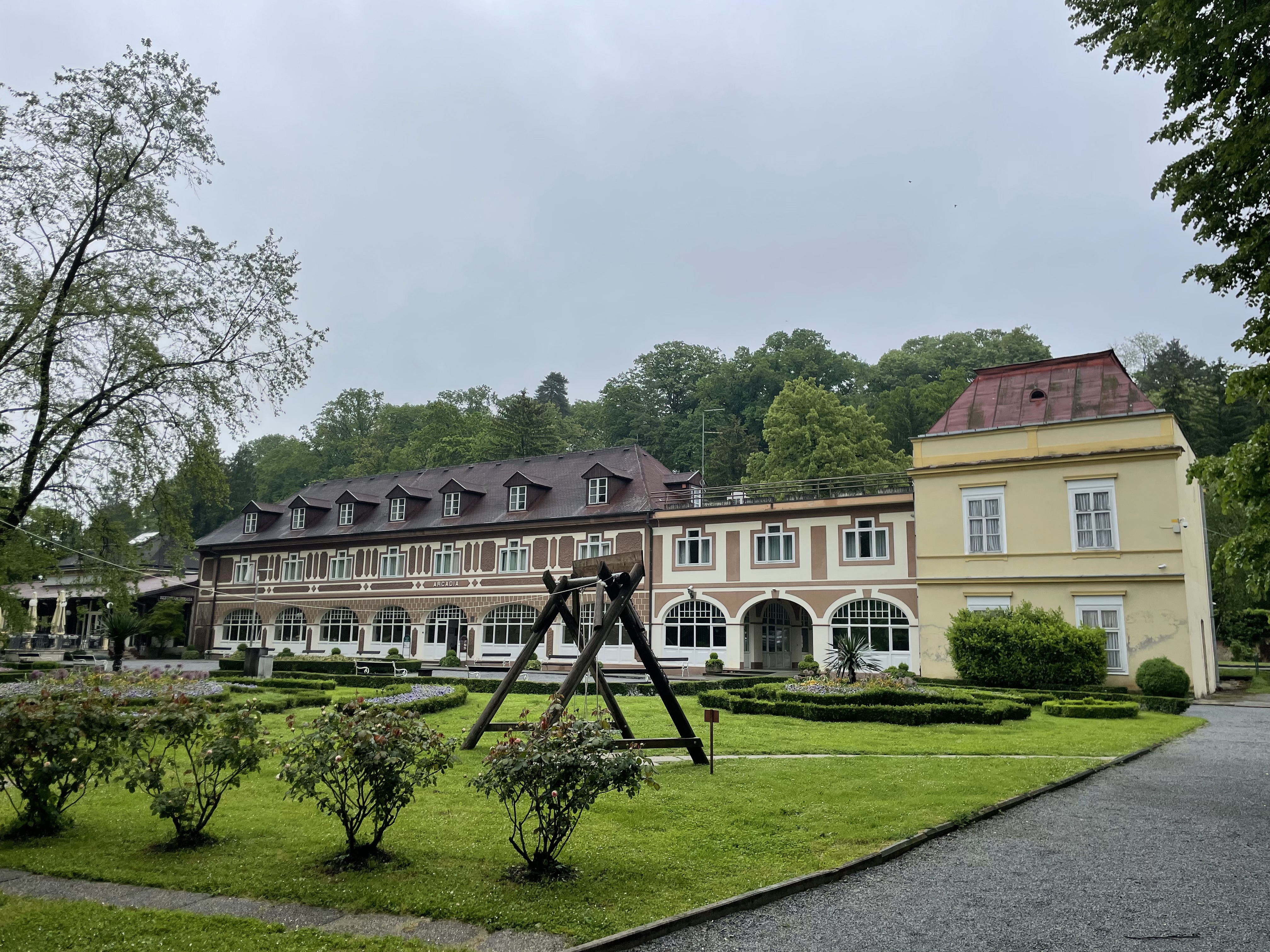
In the northeast of Croatia, just a few hours from Zagreb, the land begins to whisper its ancient story. Beneath the rolling green hills and quiet villages lies a network of geothermal springs that have been bubbling for thousands of years—nature’s own medicine chest, shaped by the meeting of tectonic plates and mineral-rich aquifers deep below the surface. Here, in this cradle of warmth and water, healing isn’t a luxury—it’s a legacy.
Daruvar: Where Wellness Meets History
Our first stop was Daruvar, one of the oldest spa towns in Croatia, known since Roman times for its thermal springs. The name itself—meaning “Crane’s Castle”—evokes the grace and resilience of this place. Archaeological findings show that Daruvar’s waters were used for medical treatments as far back as the 2nd century, when Roman soldiers and settlers came to heal their wounds and restore their strength.
At Daruvarske Toplice, the region’s celebrated health resort, we explored the modern facilities that continue this ancient tradition. The scent of mineral water lingered in the air as we slipped into a thermal bath, the temperature perfectly balanced to ease muscles and quiet the mind. Floating in the mineral pools, surrounded by lush parkland and the echo of centuries, I felt both grounded and renewed—a sense of timeless wellness that transcends eras.
Later that afternoon, we wandered into the charming town center. The locals welcomed us with a beer and cheese tasting at the Daruvar Brewery, a community favorite. It was the perfect balance of indulgence and authenticity—a reminder that wellness isn’t only found in quiet moments, but also in the laughter and connection shared around a table.


Varaždinske Toplice: The Spirit of Aquae Iasae
The next morning, our journey continued to Varaždinske Toplice, a jewel of history and healing. We were honored to be among the first guests at the brand-new Hotel Bernarda, a modern wellness sanctuary with just the right touch of intimacy—spacious, elegantly designed rooms and its own private mineral pool. It’s the kind of place that invites you to linger, to breathe, and to explore.
But what lies beyond its doors is what truly captured my heart. Just steps away, the Museum and Archaeological Site “Aquae Iasae” reveals the story of an ancient Roman spa complex that once stood here. Walking among the ruins of thermal baths, temples, and colonnades, I could almost hear the echo of Roman footsteps, feel the steam rising from the pools, and sense the reverence with which they approached these sacred waters.
The Romans weren’t alone. The Greeks before them, and countless civilizations since, understood that water was a healer—its warmth a balm for both body and soul. From the eastern reaches of the empire all the way to Bath, England, Roman soldiers followed the path of thermal waters as they traveled, bathing and recovering in these natural sanctuaries. Varaždinske Toplice was one such vital stop—a waypoint on the empire’s wellness map.


Varaždin: A Step Back in Time
No visit to the region would be complete without exploring Varaždin, often called the “Little Vienna” of Croatia. The old town’s baroque beauty and its fairy-tale fortress seemed to transport us through time. Cobblestone streets, ornate facades, and the quiet hum of café life blended seamlessly with the echoes of history.
As I stood by the old walls, I realized that these thermal waters—rising, flowing, healing—connect us across generations. They’ve witnessed the march of empires, the evolution of medicine, and the enduring human desire to be well.
My time in Croatia’s thermal towns opened more than pores—it opened perspective. Healing isn’t a new trend; it’s an ancient rhythm. One that flows through the land, through time, and through us.



Leave a Reply